Unsweetened vs Sweetened Dried Mango: Which Is Healthier for Weight Loss?
Trying to lose weight without giving up snacks means choosing wisely, and dried mango is a common gray area. Some versions support your goals, while others quietly work against them. Here’s how unsweetened and sweetened dried mango really compare when weight loss is the priority.
What Makes Sweetened Dried Mango Different?
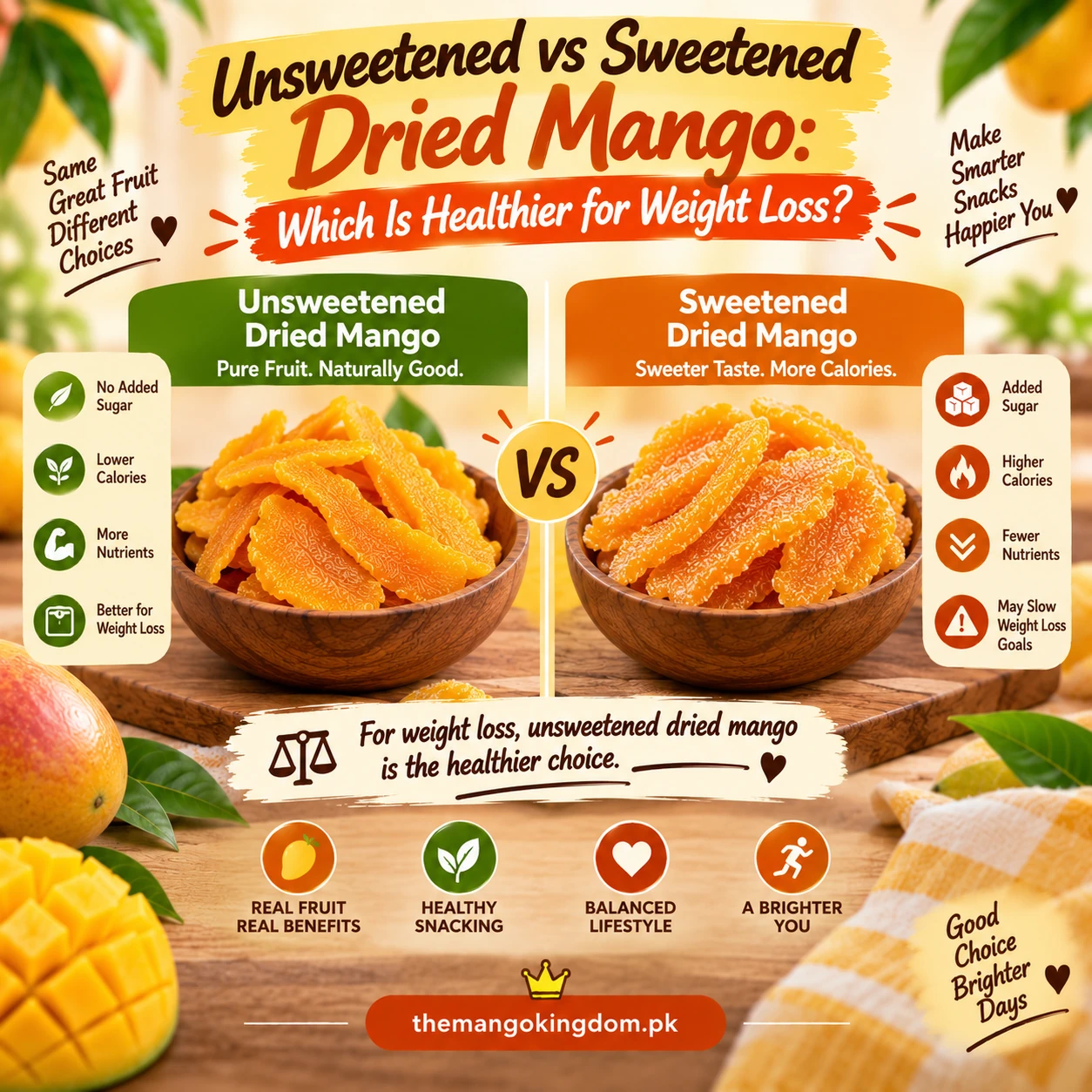
Sweetened dried mango has extra sugar syrup added during processing, on top of the fruit’s own natural sugar. This boosts flavor and shelf appeal but significantly increases calorie and sugar content per serving. For weight-conscious eaters, this extra sugar adds up quickly without adding real nutritional value.
Why Unsweetened Dried Mango Supports Weight Loss Better
Unsweetened dried mango relies only on the fruit’s natural sugar, keeping calorie counts noticeably lower per serving. Its fiber content also helps you feel full longer, reducing the urge to snack again soon after. This makes it a smarter choice for anyone actively managing daily calorie intake.
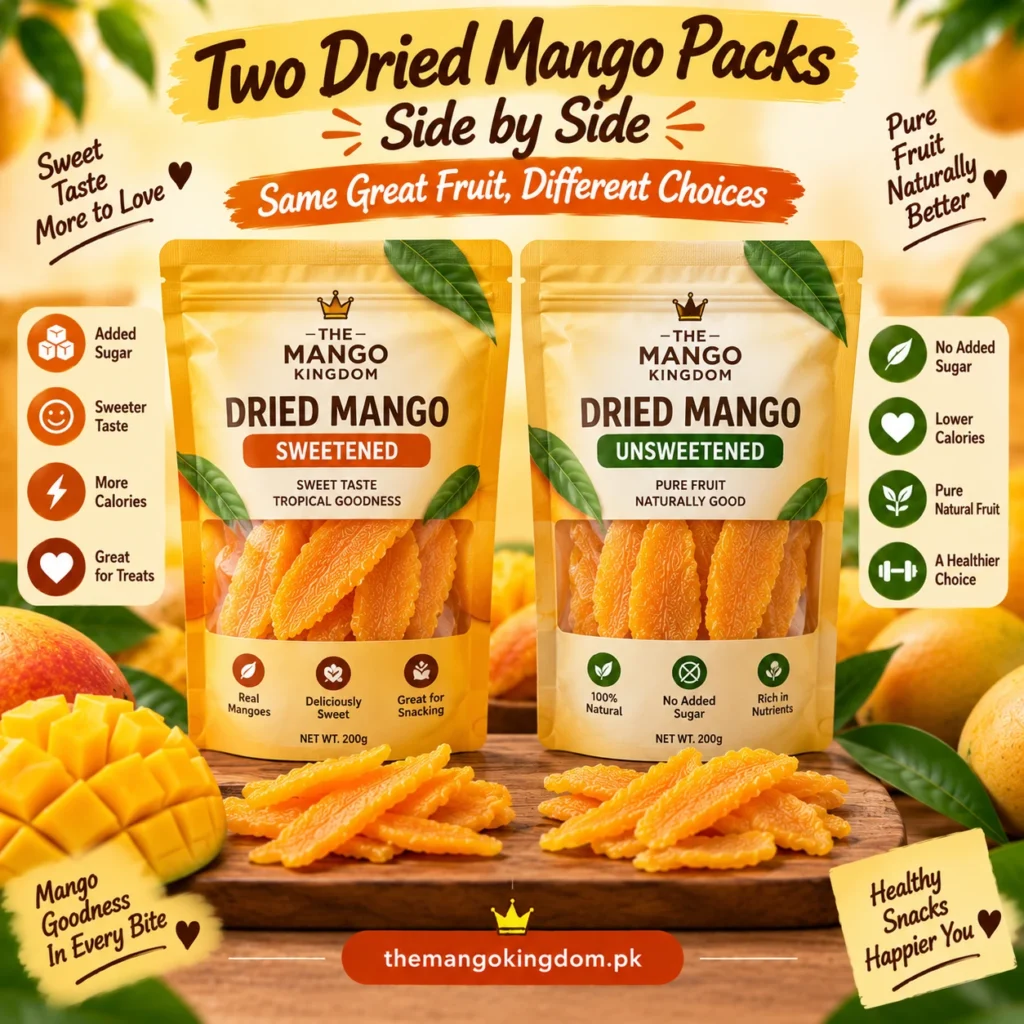
Our dried mango 200g pack is completely unsweetened, making portion tracking and calorie counting far more predictable.
Comparing Cravings and Satiety – Unsweetened vs Sweetened Dried Mango
Sweetened dried mango often triggers stronger sugar cravings shortly after eating, leading to overeating or reaching for more snacks. Unsweetened versions tend to satisfy cravings more steadily since they don’t spike blood sugar as sharply. This steadier response makes portion control noticeably easier over time.

How to Read Labels Correctly
Always check the ingredient list rather than trusting front-of-pack claims like “natural” or “healthy.” If sugar, syrup, or sulfites appear anywhere on the list, it’s a sweetened product regardless of marketing language. True unsweetened dried mango should list only one ingredient: mango.
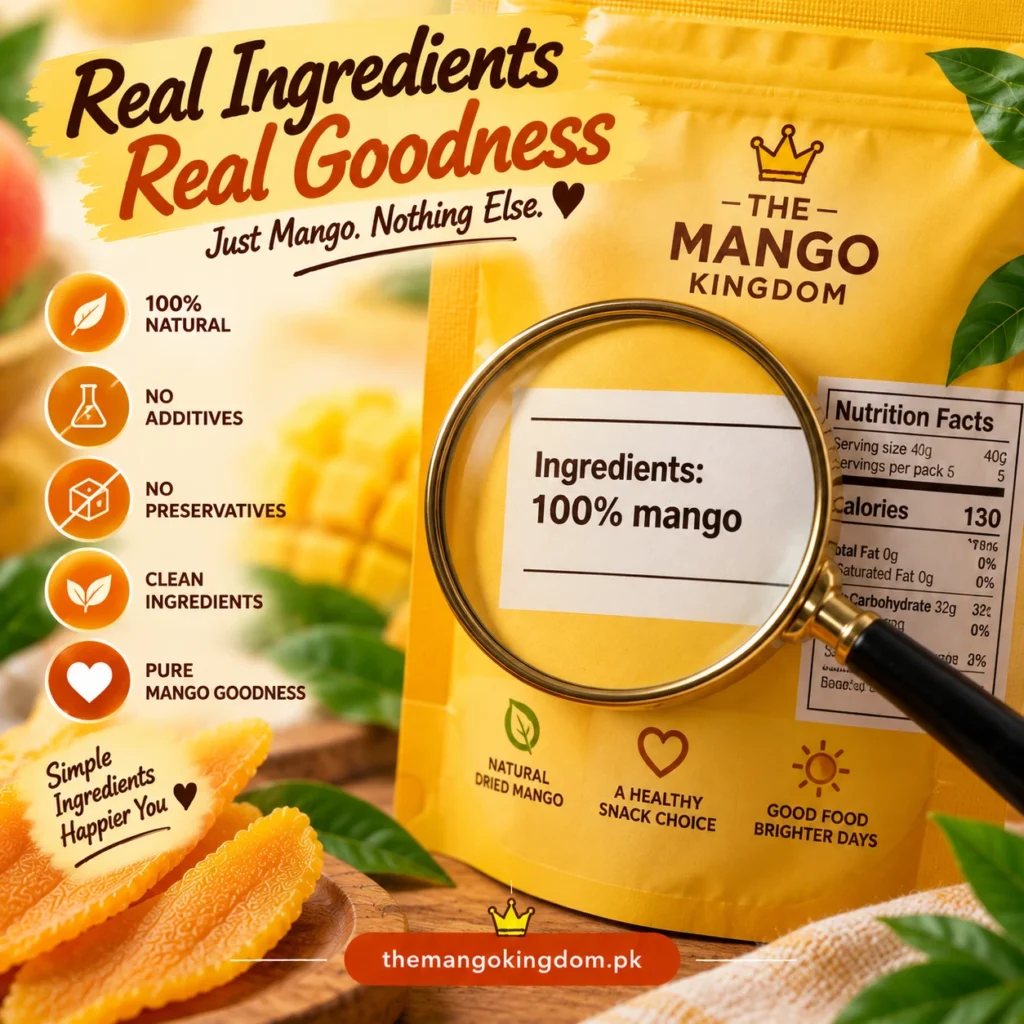
Our dried mango slices 300g pack and dehydrated mango 400g pack both follow this simple, single-ingredient standard and wholesale minimum MOQ starting from 5kg.
Building Dried Mango Into a Weight Loss Plan
Pairing a small portion of unsweetened dried mango with protein, like nuts or yogurt, slows sugar absorption and extends fullness. Sticking to a single daily handful, roughly 30g, keeps calories in check while still satisfying sweet cravings naturally. This balance makes it sustainable rather than something you eventually give up on.
Conclusion
When weight loss is the goal, unsweetened dried mango is the clear winner over sweetened alternatives. It delivers the same chewy satisfaction with less sugar, fewer calories, and steadier energy without the crash. Choosing quality, single-ingredient dried mango makes healthy snacking simple rather than something to overthink.