Chaunsa Mango Scientific Name, Origin, History & Name in English, Urdu and Hindi
Chaunsa Mango Scientific Name – Botanical Classification
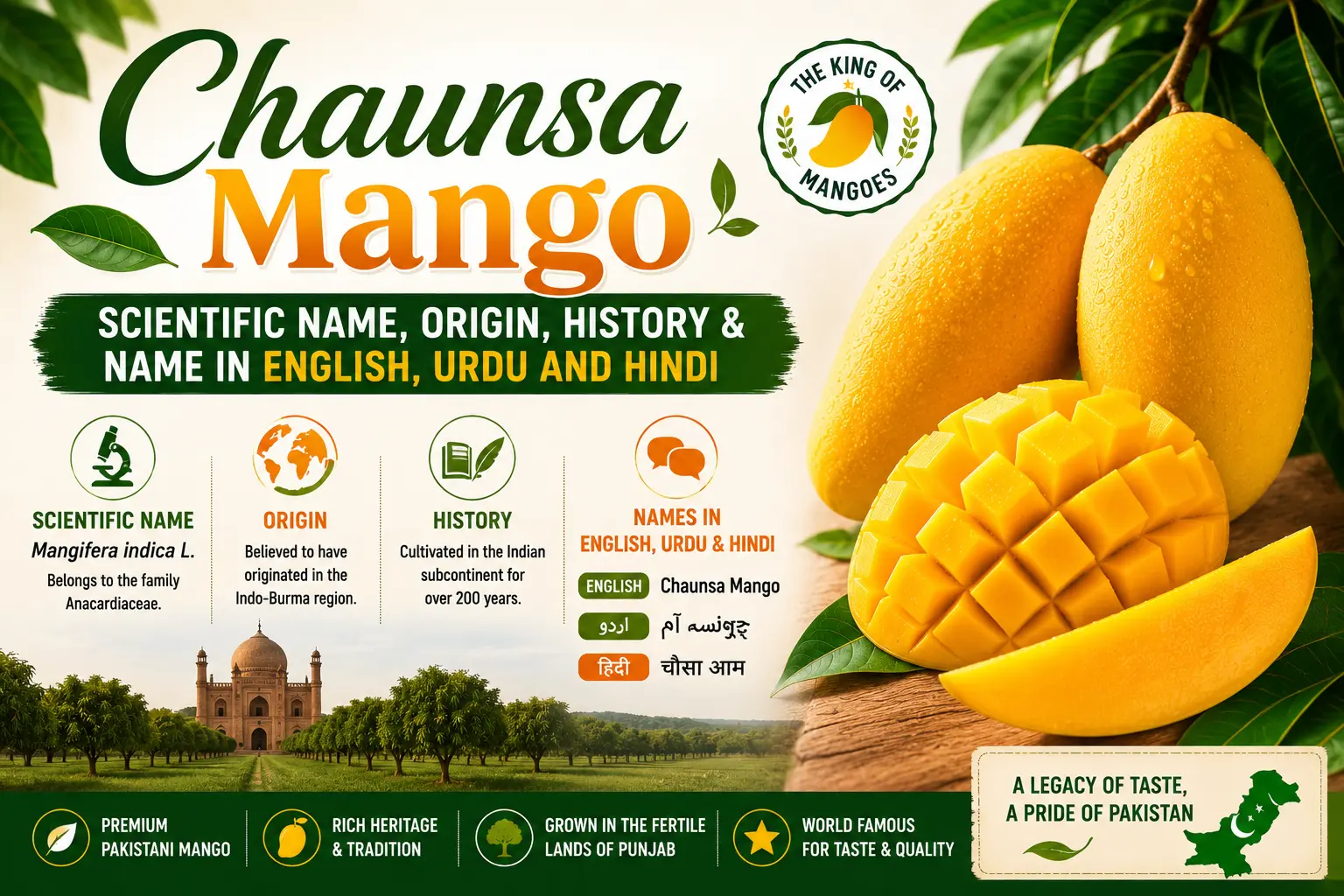
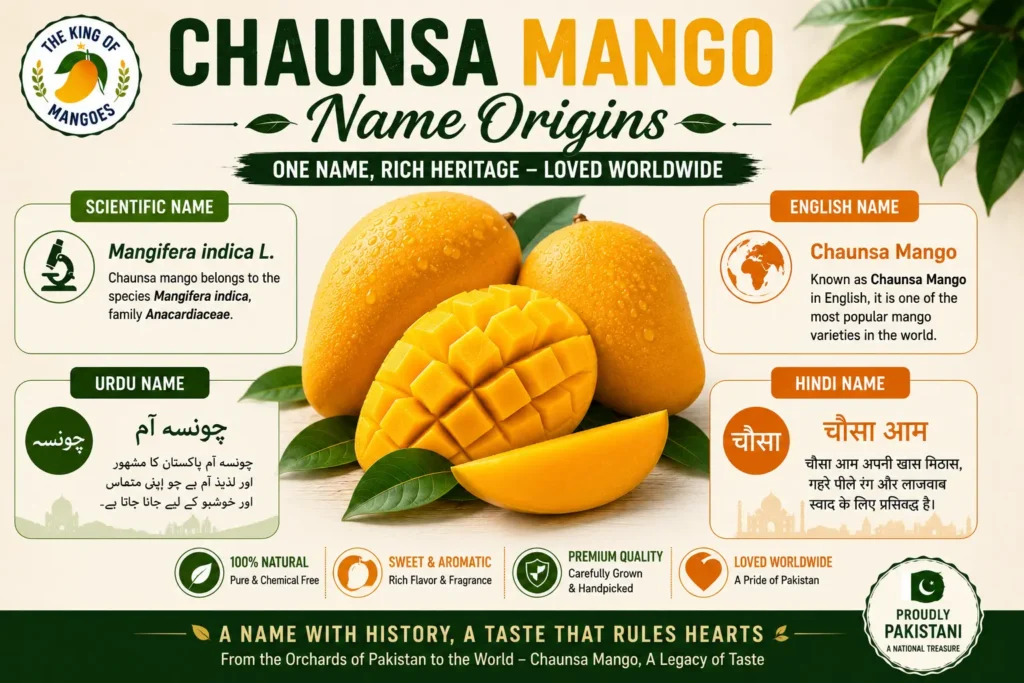
Chaunsa mango is botanically classified as Mangifera indica, belonging to the family Anacardiaceae, the order Sapindales, and the genus Mangifera — a genus comprising over 69 recognised mango species distributed across tropical and subtropical regions worldwide. Within the Mangifera indica species, Chaunsa is a distinct cultivar developed through centuries of selective cultivation across Punjab, Pakistan, achieving its unique fibre-free pulp, 18–22% Brix sugar level, and extraordinary floral aroma through generations of careful agricultural refinement. Explore more on Chaunsa mango facts, Pakistani mango varieties, Mangifera indica cultivars, and buy Chaunsa mango online.
Chaunsa Mango in English – What Is It Called?
Chaunsa mango carries no direct English translation and is internationally recognised simply as “Chaunsa” or “Chausa” in English-speaking markets across the UAE, UK, Canada, and Europe — a name proudly rooted in South Asian Mughal imperial history rather than any English botanical terminology. In international trade documents, export certificates, and global fruit markets, Chaunsa is officially listed under its original Urdu name, making it one of the very few Pakistani agricultural products globally recognised and traded exclusively under its native regional name.
Chaunsa Mango in Urdu and Hindi – Local Names
In Urdu, Chaunsa mango is written as چونسہ آم and pronounced “Chawn-sa Aam” — with “Aam” being the Urdu word for mango — and is celebrated across Pakistani households, bazaars, and fruit markets as the undisputed king of all summer fruits every single season. In Hindi, Chaunsa mango is written as चौंसा आम and is equally recognised across the Indian states of Uttar Pradesh, Delhi, and Haryana, where Pakistani Chaunsa mangoes are imported and sold at premium prices during the peak July–August mango season.
Chaunsa Mango Origin – Where Does It Come From?
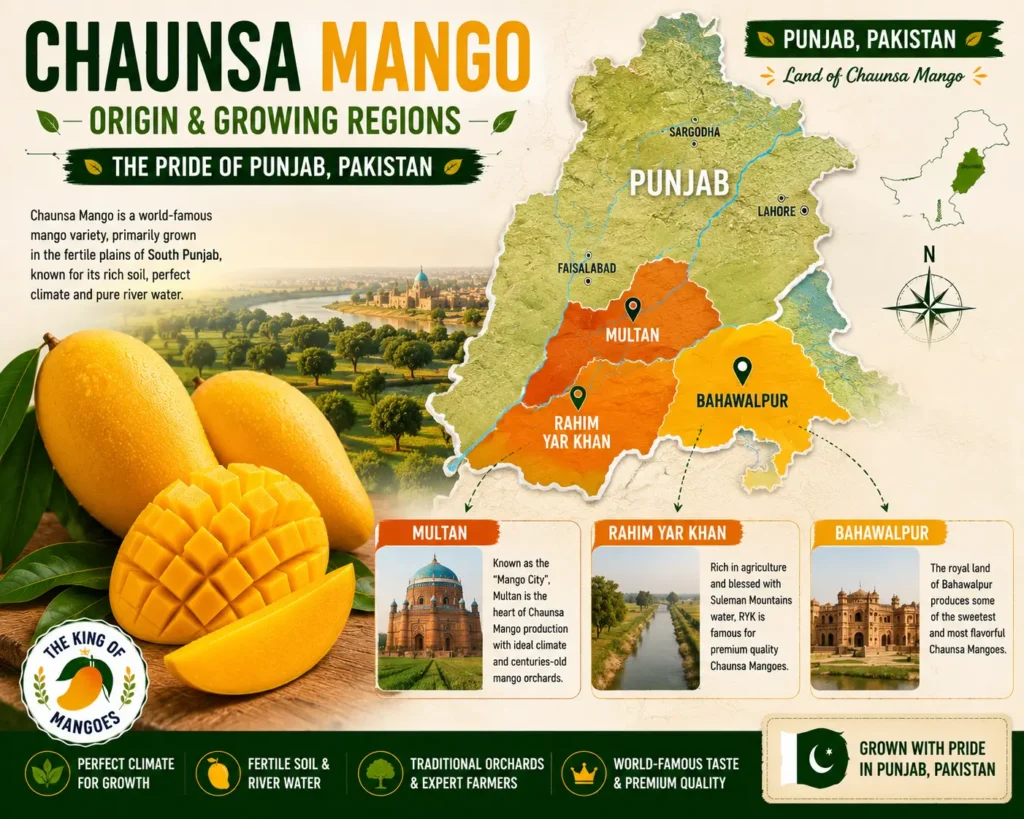
Chaunsa mango originates from Multan, Punjab, Pakistan — historically known as the “City of Saints” and one of South Asia’s oldest continuously inhabited cities — where its unique combination of intense summer heat, fertile alluvial soil, and abundant canal irrigation creates the perfect growing conditions for this extraordinary variety. The Multan, Rahim Yar Khan, and Bahawalpur districts of southern Punjab collectively produce the finest quality Chaunsa mangoes, benefiting from temperatures of 38–45°C during peak summer and rich sandy-loam soils that naturally concentrate sugar levels in the developing fruit.
Chaunsa Mango From Which Country – Pakistan’s Royal Export
Chaunsa mango is exclusively a Pakistani mango variety, originating from and cultivated primarily in Punjab province, Pakistan, making it one of Pakistan’s most powerful agricultural ambassadors representing the country’s farming excellence across 25+ international export destinations. Pakistan ranks among the world’s top five mango-producing nations, generating over 1.8 million metric tonnes annually across 1.1 million acres of cultivated mango land, with Chaunsa contributing a major share of the $50 million annual mango export revenue earned through Gulf, European, and North American markets.
Chaunsa Mango History – A Royal Mughal Legacy Since 1539
The history of Chaunsa mango is inseparably linked to Mughal Emperor Humayun, who named this extraordinary variety after his decisive military victory at the Battle of Chausa fought on June 26, 1539, near the banks of the Ganges River in present-day Bihar, India — transforming a local fruit into a symbol of imperial triumph. Following Humayun’s victory, the mango was cultivated and refined across the royal Mughal agricultural estates of Punjab, gradually evolving over centuries of selective farming into the premium fibre-free, ultra-sweet variety that today commands international recognition and premium export prices across global fruit markets.
Conclusion
Chaunsa mango carries one of the most extraordinary stories in the entire world of tropical fruits — from a Mughal Emperor’s 1539 battlefield victory to becoming Pakistan’s most celebrated agricultural export recognised across 25 countries under its proud original Urdu name. Scientifically classified as Mangifera indica, originating from Multan’s fertile Punjab heartland, and known as چونسہ آم in Urdu and चौंसा आम in Hindi, Chaunsa mango represents centuries of royal heritage, agricultural excellence, and natural sweetness in every golden fibre-free bite.
 **Alt Text:** Sindhri mango size shape and appearance guide](https://themangokingdom.pk/wp-content/uploads/2026/05/sindhri-mango-size-shape-appearance-768x512.webp "Sindhri Mango Size, Shape, and Appearance — What the King of Mangoes Really Looks Like 6")
 **Alt Text:** Sindhri mango history and origin in Pakistan](https://themangokingdom.pk/wp-content/uploads/2026/05/sindhri-mango-history-origin-768x512.webp "Sindhri Mango History and Origin — The True Story of Pakistan's King Mango 7")